No products in the cart.


Pakistan is a country where ancient civilizations, regional traditions and modern life come together in remarkable ways. From the historic streets of Lahore and the ancient ruins of Mohenjo-daro to the mountain communities of Hunza, Gilgit-Baltistan and Chitral, Pakistani culture is shaped by centuries of history, diverse landscapes and the traditions of many different communities.
For travelers, exploring the culture of Pakistan is about much more than visiting historical monuments. It is about meeting local people, sharing a meal, listening to traditional music, visiting local markets and experiencing the customs that continue to connect communities with their past.
Pakistan is officially described as a multi-ethnic and multicultural society, with distinct traditions across its provinces and regions. UNESCO also highlights the country’s extensive intangible cultural heritage, including oral traditions, performing arts, social practices, festivals, knowledge and traditional skills.
One of the most fascinating aspects of Pakistani culture and traditions is the diversity found within a relatively small geographic area.
Punjab has its own traditions of music, poetry, agriculture and hospitality. Sindh is known for its ancient heritage, Ajrak textiles, Sindhi embroidery and Sufi traditions. Khyber Pakhtunkhwa has a strong Pashtun cultural identity, while Balochistan has distinctive tribal traditions, crafts and music.
In the north, Gilgit-Baltistan and Chitral offer another completely different cultural experience. Communities such as the Burusho, Wakhi, Shina-speaking people and Kalash have preserved distinctive languages, clothing, music and customs.
This diversity means that there is no single definition of Pakistani culture. Instead, the country is made up of many regional cultures that together create Pakistan’s cultural identity.
Hospitality is one of the qualities travelers frequently notice when visiting Pakistan.
In many communities, guests are welcomed with tea, food and conversation. Visitors may be invited into a family home even when they have only recently met their hosts. In mountain villages, this hospitality can feel particularly personal, as local people are often happy to share stories about their communities, traditions and way of life.
For international travelers, these everyday interactions can become some of the most memorable moments of a Pakistan cultural tour.
A cup of chai with a local family, a traditional meal in a village or a conversation with a shopkeeper can provide a more genuine understanding of the country than simply visiting famous tourist attractions.
Language is another important part of Pakistan’s cultural heritage.
Urdu is the national language and is widely understood across the country, while English is commonly used in education, business and official communication. At the regional level, Pakistan is home to many languages, including Punjabi, Sindhi, Pashto, Balochi, Saraiki, Hindko, Shina, Burushaski, Wakhi and several languages spoken by communities in Chitral and the northern areas.
These languages are more than methods of communication. They carry folk stories, poetry, songs, traditional knowledge and the history of local communities.
For travelers exploring northern Pakistan, hearing different languages from one valley to another is a reminder of just how diverse the country really is.
Traditional clothing remains an important part of everyday life and celebrations in Pakistan.
The shalwar kameez is perhaps the most recognizable traditional Pakistani dress and is worn by both men and women, with regional variations in fabric, embroidery, colors and design. Men may also wear traditional waistcoats, turbans or regional caps, while women’s clothing often features detailed embroidery and locally produced fabrics.
In Gilgit-Baltistan, Chitral, Punjab, Sindh, Khyber Pakhtunkhwa and Balochistan, traditional clothing can look very different from one region to another.
These differences are particularly visible during weddings, festivals and cultural celebrations, when people often wear their finest traditional clothes.
Food is at the heart of social life in Pakistan.
Pakistani cuisine varies considerably from region to region. Punjab is famous for dishes such as saag, makki di roti, butter chicken and a wide range of grilled foods. Sindh has its own distinctive flavors and traditional dishes, while Khyber Pakhtunkhwa is known for meat-based dishes and Pashtun cuisine.
In northern Pakistan, visitors can discover local foods prepared with ingredients that are closely connected to the mountain environment. Apricots, walnuts, cherries, mulberries, local breads and dairy products are common in many communities.
Popular Pakistani dishes such as biryani, nihari, kebabs, karahi and various types of pulao have also become an important part of the country’s food identity. Traditional cuisine is recognized as part of Pakistan’s wider intangible cultural heritage.
For visitors, trying local food is one of the easiest ways to experience Pakistani culture through food.
Music and poetry have deep roots in Pakistani society.
From classical music and ghazal to qawwali and regional folk songs, music has traditionally been used to express love, spirituality, history and everyday life. Sufi traditions have also had a significant influence on Pakistani literature, music and cultural expression.
Different regions have their own musical instruments, songs and dances. In Sindh, Punjab, Khyber Pakhtunkhwa, Balochistan and the northern areas, folk music remains an important way of preserving local identity.
Poetry is equally important. The works and stories of poets such as Allama Iqbal, Bulleh Shah, Shah Abdul Latif Bhittai, Khushal Khan Khattak and many other regional poets continue to influence Pakistani culture.
Festivals provide another opportunity to experience the diversity of Pakistani traditions.
Eid-ul-Fitr and Eid-ul-Azha are major celebrations across the country, bringing families together for prayers, meals and gatherings. Alongside religious celebrations, Pakistan also has regional festivals connected with spring, harvests, local saints, traditional sports and community heritage.
The Lok Virsa Festival in Islamabad, for example, brings together artisans, folk artists, musicians and traditional food from different parts of Pakistan, allowing visitors to experience cultural traditions from across the country in one place.
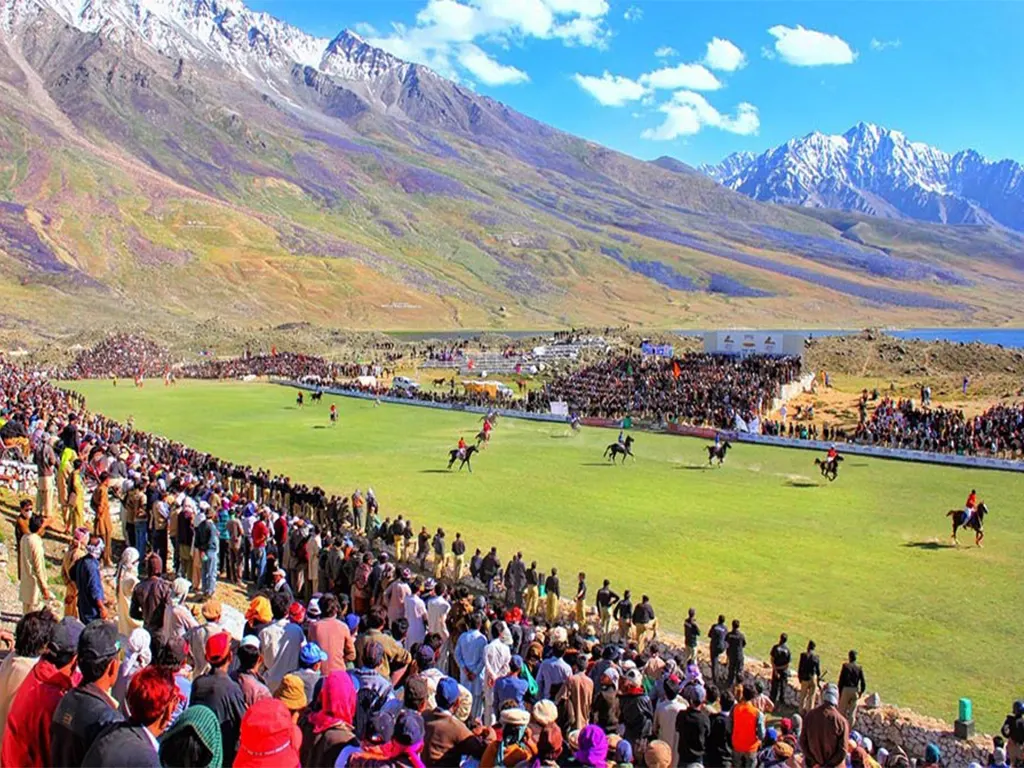
In northern Pakistan, festivals can be especially colorful. Events such as the Shandur Polo Festival combine traditional sports, local culture and spectacular mountain landscapes.
For travelers interested in Pakistani culture, Hunza and Gilgit-Baltistan offer an unforgettable experience.
The communities of the region have developed traditions that are closely connected with the mountains, agriculture and seasonal life. Villages are surrounded by dramatic peaks, ancient irrigation channels, terraced fields and historic forts.
Places such as Karimabad, Altit, Gulmit, Passu and Khunjerab provide opportunities to experience local architecture, food, handicrafts and traditional lifestyles.
The region is also home to remarkable linguistic and cultural diversity. In areas such as Gojal, visitors can encounter Wakhi traditions alongside other local cultures.
This combination of mountain scenery and cultural heritage makes northern Pakistan particularly attractive for travelers who want to go beyond conventional sightseeing.
The Kalash communities of Chitral represent one of Pakistan’s most distinctive cultural traditions.
Their festivals, clothing, music, architecture and social customs have attracted visitors and researchers from around the world. The communities live primarily in the valleys of Bumburet, Rumbur and Birir.
The preservation of Kalash heritage is part of wider efforts to safeguard the living cultural heritage of indigenous communities in Pakistan. UNESCO has recently highlighted work supporting the safeguarding of the living heritage of Kalasha communities in Khyber Pakhtunkhwa.
Visiting the Kalash valleys offers travelers an opportunity to learn about a community whose traditions are deeply connected with the landscape and generations of local knowledge.
Pakistani culture cannot be separated from the country’s ancient history.
The region contains archaeological evidence associated with some of the world’s earliest civilizations. Mohenjo-daro, Taxila, Harappa and Mehrgarh are important reminders of the long history of human settlement in the area.
Pakistan currently has six properties inscribed on the UNESCO World Heritage List, including the Archaeological Ruins at Moenjodaro, Taxila, the Fort and Shalamar Gardens in Lahore, the Historical Monuments at Makli, the Buddhist Ruins of Takht-i-Bahi and Rohtas Fort.
These sites allow travelers to understand Pakistan not only as a modern country but also as a land shaped by thousands of years of civilizations, trade, religion, architecture and cultural exchange.
Pakistan has a rich tradition of handmade crafts.
Depending on the region, visitors can find embroidered textiles, carpets, pottery, woodwork, metalwork, shawls, traditional caps and handmade decorative items.
Truck art is perhaps one of the most recognizable examples of Pakistani visual culture. Bright colors, detailed patterns, poetry and elaborate designs transform ordinary vehicles into moving works of art.
Traditional handicrafts also provide an important connection between tourism and local communities. Buying locally made products can help support artisans while allowing visitors to take a small piece of Pakistan’s cultural heritage home with them.
Traveling through Pakistan provides an opportunity to see a side of the country that cannot be captured in photographs alone.
The mountains of Hunza, the historic streets of Lahore, the archaeological remains of Taxila and Mohenjo-daro, the traditions of the Kalash valleys and the cultural landscapes of Sindh and Balochistan all tell different stories.
Pakistan’s cultural heritage is not limited to monuments and museums. It is found in homes, kitchens, village festivals, traditional clothing, music, languages, handicrafts and the everyday hospitality of local communities.
For travelers looking for an authentic cultural tour of Pakistan, this diversity creates the opportunity to explore the country at a deeper level.
Culture in Pakistan is a living combination of history, traditions, languages, food, music, hospitality and regional identities. From ancient civilizations to contemporary cities and from the valleys of the Karakoram to the plains of Punjab and the deserts of Sindh, every region contributes something unique.
The best way to understand Pakistani culture is not simply to read about it, but to experience it. Sit down for chai with local people, taste traditional food, visit a village market, listen to folk music and take time to learn the stories behind the places you visit.
That is where the real character of Pakistan begins to reveal itself.
At Hunza Venture Treks & Tours, we believe that traveling through Pakistan should be about more than visiting destinations. Our tailor-made Pakistan tours, cultural tours, trekking adventures and northern Pakistan trips are designed to combine landscapes, local communities, history and authentic travel experiences.
Whether you want to explore Hunza Valley, Gilgit-Baltistan, Skardu, Chitral, Kalash Valley, Lahore or the ancient heritage of Pakistan, we can help you create a private journey around your interests.



Explore Beyond Boundaries

